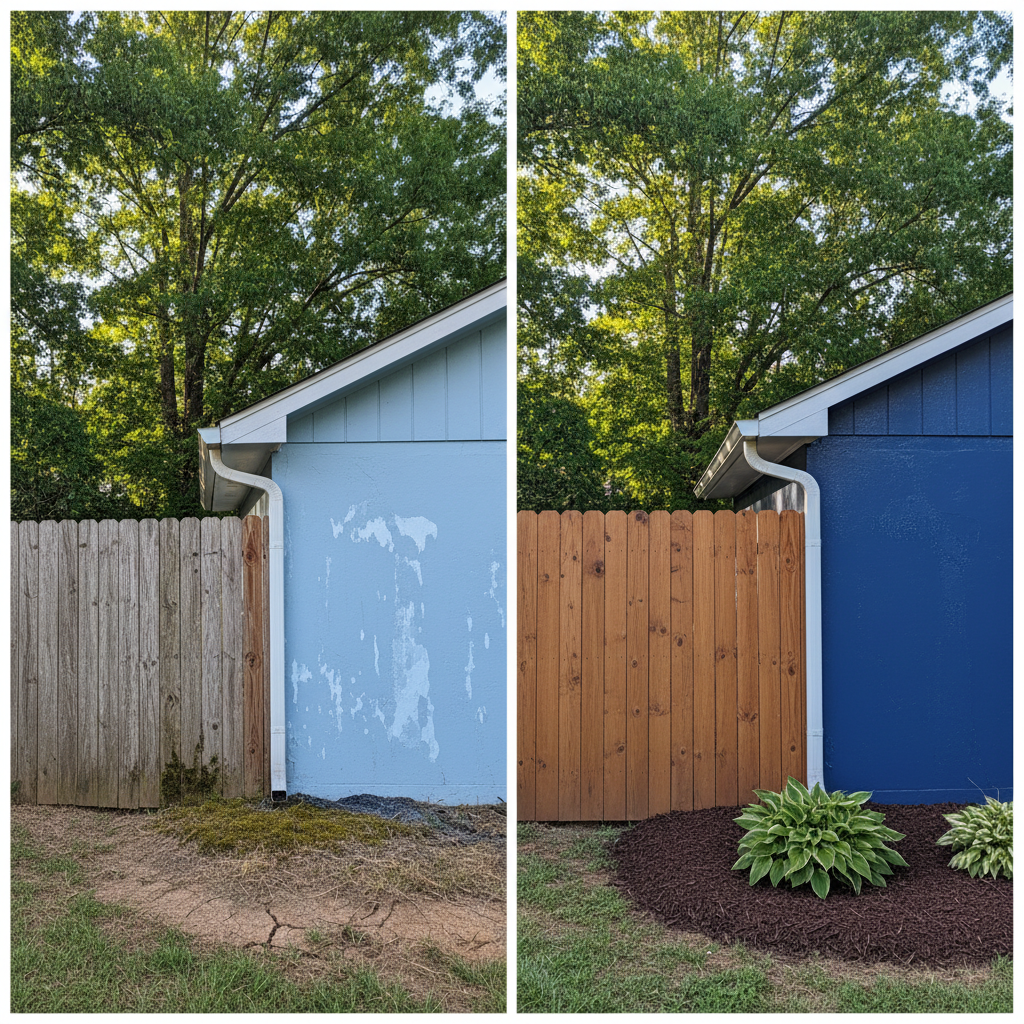
Your business storefront or office building is often the first impression folks get of what you do. So, when that paint starts looking faded, chipped, or just plain old, you know it's time to do something about it. But what's the right move? Do you go all in with a full repaint, or can you get away with just touching up the problem spots? It's a common question I get here in Fayetteville, and the answer isn't always black and white.
The Full Repaint: A Fresh Start
A full repaint is exactly what it sounds like: we're painting the entire exterior of your commercial property. This means thorough prep work – cleaning, scraping loose paint, sanding, priming – and then applying two fresh coats of paint over everything. It's a comprehensive solution, and it’s usually what I recommend for buildings that haven't been painted in 7-10 years, or those that have significant widespread damage.
Cost: This is going to be the most expensive option upfront, no doubt about it. You're paying for more labor, more materials, and more time on site. There's no getting around that.
Durability: When done right, a full repaint offers the best long-term durability. You're getting a consistent, fresh layer of protection across the entire building. This means better resistance to our humid Fayetteville summers and the occasional harsh winter weather. A good quality paint job can easily last another 7-10 years, sometimes even longer.
Maintenance: Once it's done, maintenance is pretty low. You'll want to keep it clean, maybe a soft wash every couple of years, but you won't be thinking about major paint work again for a long time.
Appearance: Unbeatable. A full repaint makes your business look brand new. It's crisp, clean, and uniform. This can significantly boost your curb appeal, making a strong statement to potential customers driving down Skibo Road or through downtown.
The Touch-Up Job: Targeted Repair
Now, a touch-up job is a different beast. This is where we focus only on the areas that need attention – maybe some peeling paint around a window frame, faded sections on a particular wall, or scuffs near the entrance. The goal is to blend the new paint seamlessly with the existing, older paint.
Cost: Generally, this is a much cheaper option upfront. Less paint, less labor, less time. If you're on a tight budget and the overall condition of your paint is still pretty good, this can seem like a smart move.
Durability: This is where touch-ups can fall short. The new paint might be durable, but it's only as good as the old paint it's blending with. If the surrounding areas are already weak or nearing the end of their life, those spots will likely fail sooner, even if the touched-up parts hold up. You're not getting the same consistent protection as a full repaint.
Maintenance: You might find yourself needing more frequent touch-ups. As other areas of the old paint fail, you'll be calling us back to fix those too. It can become a cycle, and sometimes, those small jobs add up to more than a full repaint would have cost in the first place.
Appearance: This is the trickiest part. While a skilled painter can do a great job blending, it's incredibly hard to get a perfect match, especially with older, faded paint. The new paint will be brighter, and even if it's the exact same color code, the old paint has weathered and oxidized. You often end up with noticeable patches, which can make your building look like it's been patched up, rather than looking fresh and inviting. It's especially tough on buildings with a lot of direct sun exposure, like those facing west in the summer, where the sun really bakes the paint.
My Recommendation for Fayetteville Businesses
Look, I get it. Everyone wants to save a buck. But when it comes to commercial painting, I almost always lean towards a full repaint if your building is showing significant wear. Here's why:
- Long-Term Value: A full repaint lasts longer and protects your investment better. You won't be thinking about paint again for years.
- Professional Image: Your business's appearance matters. A uniform, fresh coat of paint projects professionalism and care. Patchy paint, even if it's technically